
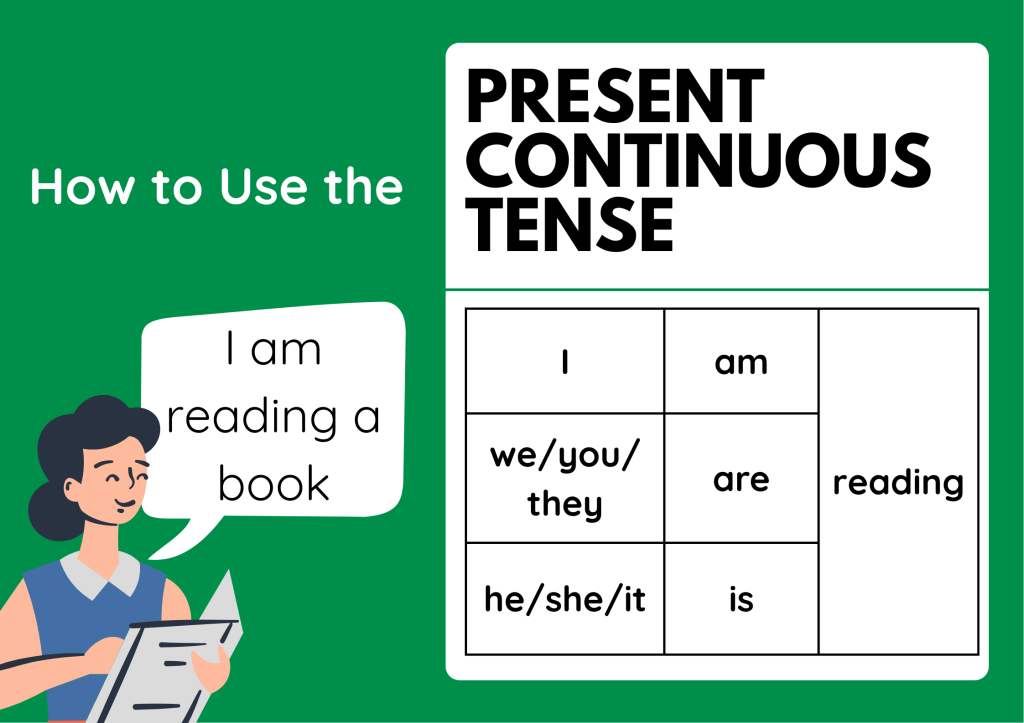
Brief Lecture on Present Continuous Tense
The Present Continuous Tense (also called Present Progressive Tense) is used to describe actions that are happening right now or around the current time. It can also refer to future planned actions.
Structure:
✅ Affirmative: Subject + Helping Verb (is/am/are) + Verb (1st form + -ing) + Object
✅ Negative: Subject + Helping Verb (is/am/are) + not + Verb (-ing) + Object
✅ Interrogative: Helping Verb (Is/Am/Are) + Subject + Verb (-ing) + Object + ?
Helping Verbs & Their Subjects (Table)
| Subject | Helping Verb | Examples (Hindi & English) |
|---|---|---|
| I | am | मैं पढ़ रहा हूँ। (I am reading.) |
| He/She/It/Singular Subject | is | वह खेल रहा है। (He is playing.) |
| You/We/They/Plural Subject | are | तुम सो रहे हो। (You are sleeping.) |
Uses of Present Continuous Tense
- Actions happening now:
- She is cooking food. (वह खाना बना रही है।)
- They are watching TV. (वे टीवी देख रहे हैं।)
- Temporary actions (not permanent):
- I am staying with my friend this week. (मैं इस हफ्ते अपने दोस्त के साथ रह रहा हूँ।)
- Future planned actions:
- We are going to Delhi tomorrow. (हम कल दिल्ली जा रहे हैं।)
- Annoying habits (with “always”):
- He is always shouting in class. (वह हमेशा क्लास में चिल्लाता रहता है।)

Common Mistakes & Corrections
❌ “I is eating.” → ✅ “I am eating.” (मैं खा रहा हूँ।)
❌ “They is playing.” → ✅ “They are playing.” (वे खेल रहे हैं।)
❌ “She are singing.” → ✅ “She is singing.” (वह गा रही है।)
Summary
- Helping Verbs: am (I), is (he/she/it), are (you/we/they)
- Verb Form: 1st form + -ing (eating, playing, running)
- Usage: Current actions, temporary situations, future plans
 A platform for my students.